
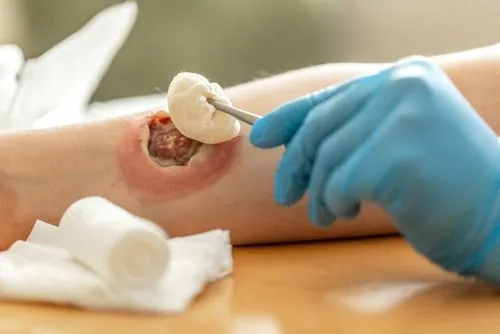
Non-healing wounds can significantly affect comfort, mobility, and overall health. Many patients experience delayed healing despite previous treatment because the underlying cause has not been fully addressed. A comprehensive vascular approach allows providers to evaluate the full picture and target the factors that prevent the body from repairing itself.
Getting to the Heart of the matter
A majority of lower extremity wounds occur due to underlying vascular disease. At CPPG we use a holistic interdisciplinary approach to healing lower extremity wounds as efficiently as possible.
Thorough testing and clinical evaluation including vascular ultrasound, nutritional assessment, radiographic studies, and detailed medical assessment are performed. This is followed by intensive local wound care with multiple advanced techniques and modalities.
Several chronic wounds have mixed etiologies complicating healing. Most commonly, diabetes, Peripheral Arterial Disease (PAD), and venous insufficiency. Patients with PAD and lower extremity wounds are at higher risk for cardiovascular death,
( >20% within a year) therefore, thorough cardiac evaluation and aggressive medical management usually follow.
Your Step-By-Step Plan
- You receive a consult with our healthcare professionals
- You are given a treatment plan to heal your wound
- You will receive a thorough ultrasound and doppler evaluation of your vascular system to figure out the underlying cause of your wound
- If an arterial disease is found, you will receive an angioplasty or a stent
- If a venous disease is found, you will receive an ablation
- You will be given proactive treatment for high blood pressure/cholesterol and diabetes to lower the risk of heart attack or stroke
Questions?
Wound Healing Education
Venous Insufficiency Ulcerations
Blood can reach the extremity but is unable to effectively return to the heart. Veins contain valves that direct the one-way blood flow- the insufficient valves prevent the backflow of blood. If the cause of the wound is venous insufficiency a LASER ablation procedure of the superficial vein is the treatment. Sometimes, placing a stent in the iliac veins is needed if venous compression syndrome is found to be the cause.
Arterial Insufficiency Ulcerations
Insufficient arterial flow to an extremity. "Hardening of the arteries" or any other condition that limits blood flow to the extremities (PAD). If vascular testing reveals significant arterial disease (Blockage) a procedure to open the occluded artery will likely follow.
Diabetic/Neuropathic Ulcerations
Etiologies can be multifactorial. Diabetes with prolonged periods of hyperglycemia (high blood sugar) can contribute to excessive callous build-up, diminished or absent sensation to pain, temperature, and position, reduced or absent sweating can contribute to these type of ulcerations of the foot. A combination of these over time can contribute to severe breakdown of joints in the foot and ankle known as Charcot joints. These can occur gradually or suddenly and can be complicated by poor blood flow, non- adherence with diabetes and nutrition management. Other types of Wounds that can lead to chronic non-healing are those Trauma and Surgical Complications; such as incision dehiscence or breaking down of the tissue due to local infection, poor blood flow or improper post-operative adherence to care.
FACTS!
Clogged arteries are a common cause of lower extremity ischemic ulcers
20% of diabetic patients with foot ulcers die within the first year. 70% die within 5 years of Cardiac-related death
These wounds are the most common reason for nearly 200,000 lower extremity amputations per year in the USA
Ongoing Care and Long-Term Prevention
As wounds begin to heal, continued vascular care plays an important role in preventing recurrence. Patients may be guided on circulation-supportive strategies such as leg elevation, compression therapy, and lifestyle adjustments that promote healthy blood flow. Follow-up visits allow providers to monitor healing progress and address changes early.
By treating both the wound and the vascular condition contributing to it, patients often experience improved mobility, reduced discomfort, and better long-term outcomes.
Treatments
Advanced Dressings
Skin Substitutes
Schedule a Wound Healing Consultation
If you have a leg or foot wound that is slow to heal, specialized vascular care can make a meaningful difference. Central PA Physicians Group provides comprehensive wound healing evaluation and treatment at office locations in Altoona, Everett, Roaring Spring, Patton, State College, and Windber, PA, while also serving patients throughout Bedford, PA.
To schedule a consultation, call (814) 201-2309.